You probably use your bank every day without thinking much about it. You swipe your card, money moves, life goes on. But here's something worth knowing: what's actually happening is that your bank is updating a number in its database. That's it. Your money is just a number on a server somewhere, and you're trusting your bank to keep it accurate and safe.
Cryptocurrency flips that model on its head. Instead of one bank keeping the score, thousands of computers around the world all keep the same record — simultaneously. Nobody owns that record. Nobody can quietly change it. And nobody can stop you from sending money to anyone else, anywhere in the world, at any time.
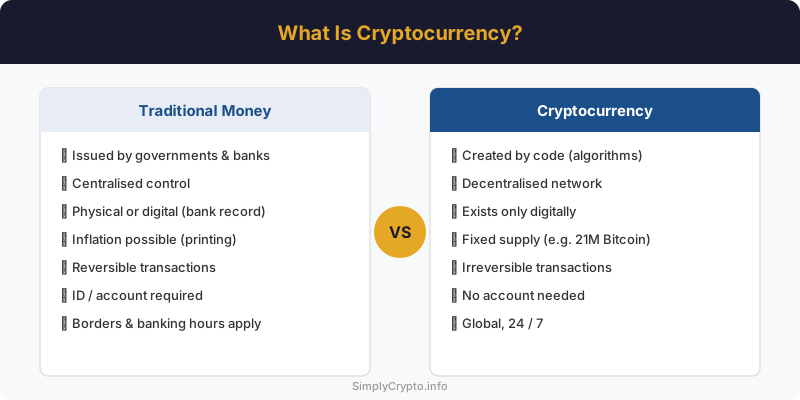
That's the core idea. A cryptocurrency is digital money that runs on a shared, public record called a blockchain. Bitcoin was the first one, created in 2009. Today there are thousands of them, each trying to solve different problems or serve different purposes. Some are serious financial tools. Some are experiments. Some are outright scams. Understanding those tradeoffs is what this entire site is about.