
Banks make money by sitting in the middle of financial transactions. You deposit money. They lend it to someone else at a higher rate. They keep the difference. DeFi — decentralised finance — is an attempt to rebuild financial services without the middleman, using smart contracts instead of banks.
Picture a lending service that runs entirely on code. When you deposit crypto, the code automatically makes it available to borrowers. When a borrower repays, the code automatically distributes interest back to you. No loan officers. No opening hours. No discrimination based on your credit score or geography. The code runs 24/7 and treats everyone the same.
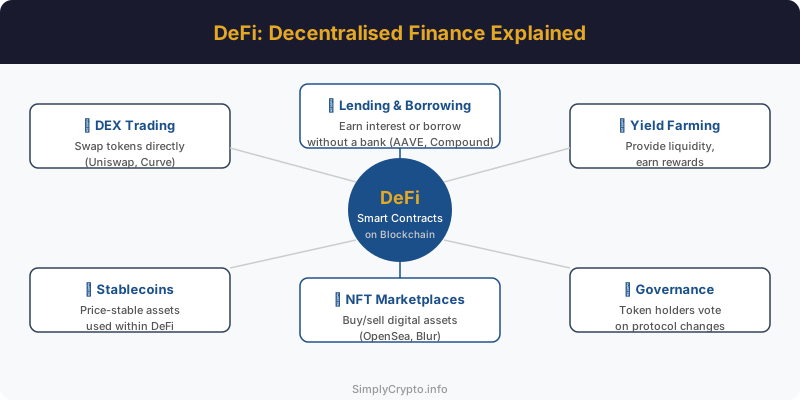
The most popular DeFi activities include: lending and borrowing (depositing crypto to earn interest, or borrowing against your holdings), decentralised exchanges (trading directly from your wallet without creating an account), and liquidity provision (supplying assets to trading pools in exchange for a share of fees). It's genuinely interesting technology — but DeFi also carries significant risks that don't exist in traditional finance: smart contract bugs, hacks, extreme volatility, and the complete absence of consumer protection. It's powerful and it's risky, and those two things are inseparable.